FosterHealth AI
Empowering Doctors with Customizable AI-Transcribed Medical Notes
Giving physicians full control over AI-generated clinical documentation
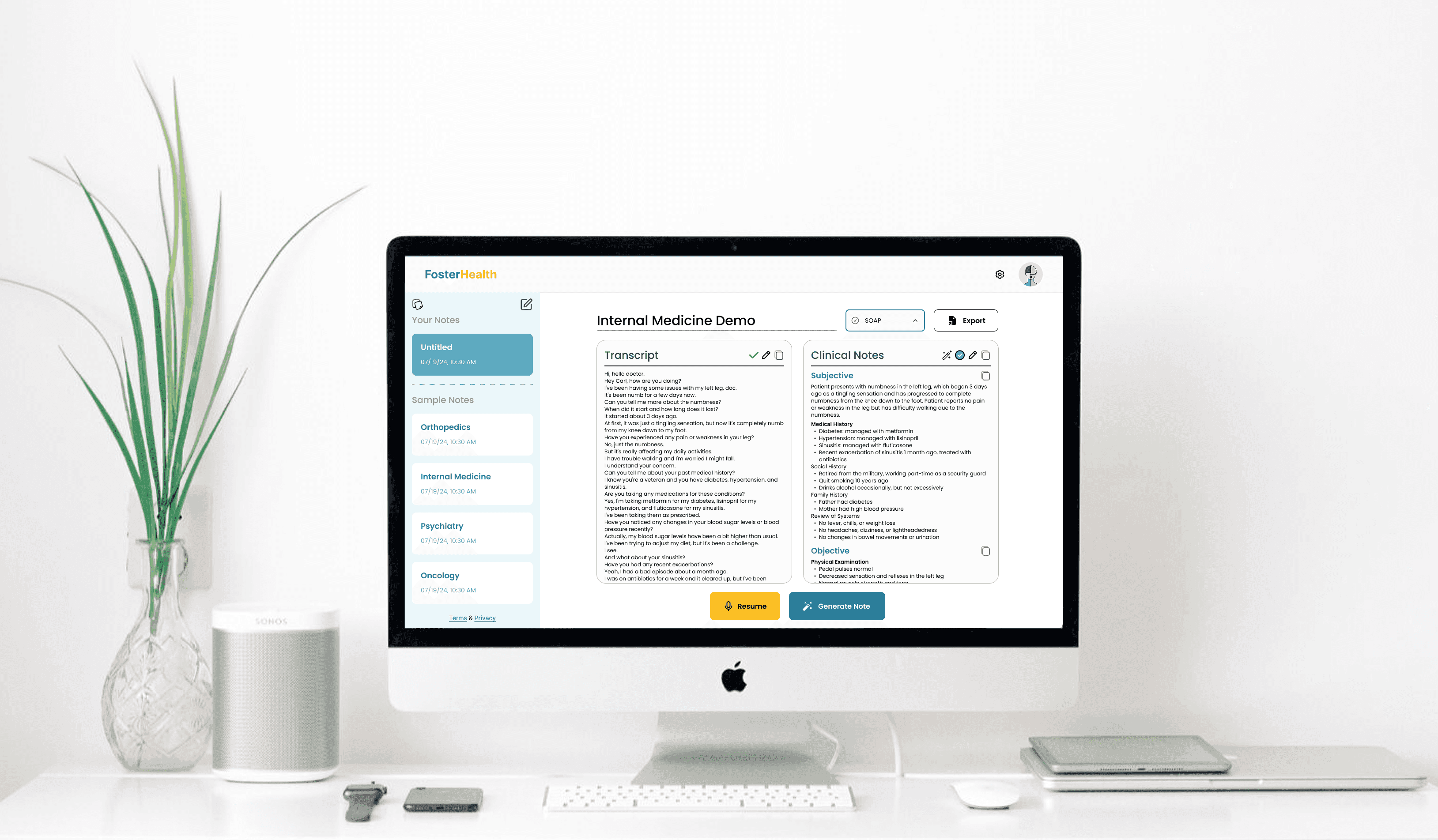
FosterHealth AI is a healthtech startup building AI-powered transcription tools to streamline clinical documentation and improve workflow efficiency. The product enables physicians to generate structured medical notes quickly while maintaining high accuracy and full control over their documentation.
My Role
I owned the UX design of a personalization feature for AI-generated clinical notes, enabling doctors to tailor outputs to their preferences. In a rapid MVP build, I collaborated closely with founder and engineering, supported internal QA and testing, and ensured the solution held up against real-world clinical workflows and operational constraints.
The Problem
Doctors feel disconnected from AI-generated notes and often spend extra time re-editing them to match their personal tone, style, and documentation preferences.
The Solution
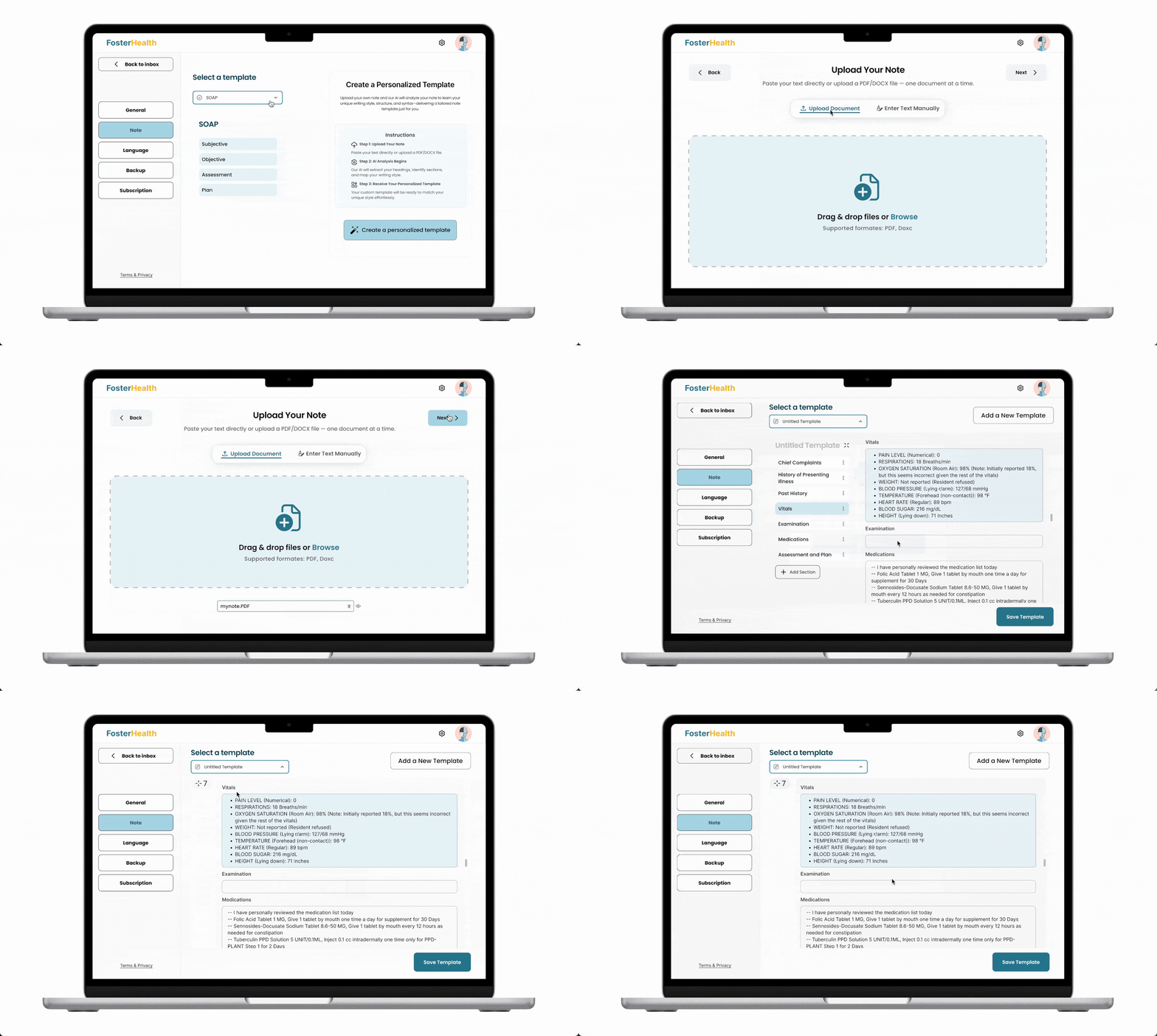
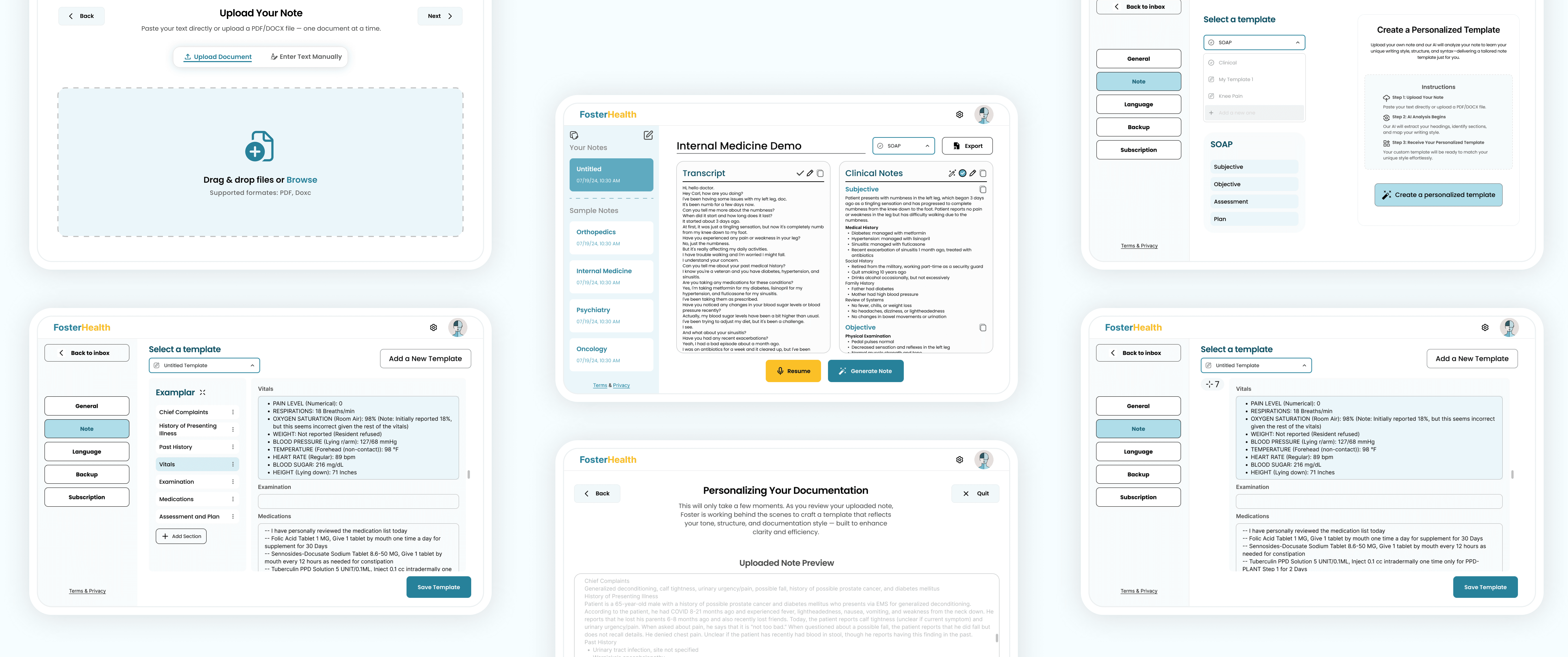
I designed a customizable feature that enables doctors to create self-defined templates based on their past medical notes, allowing Foster to learn and generate AI-powered drafts that match their tone, structure, and writing style — while giving them the flexibility to edit templates as needed.
Leading the design process
Research & Discovery
Ideation & Concepting
Wireframing & Prototyping
Feedback & Iteration
Handoff
Duration1.5 wks1 wk2 wks1.5 wks1 wkFocus- Surface pain points with AI-generated notes
- Competitor analysis
- Stakeholder interviews
- Map the current user flow
- Brainstorm key features
- Build the design system
- Map the user flow
- Sketch mid-fidelity prototypes
- Internal reviews
- Collect early-stage feedback
- Iterate
- Deliver high-fidelity prototypes
- Design-spec documentation
Research & Discovery
1.5 wks- Surface pain points with AI-generated notes
- Competitor analysis
- Stakeholder interviews
Ideation & Concepting
1 wk- Map the current user flow
- Brainstorm key features
Wireframing & Prototyping
2 wks- Build the design system
- Map the user flow
- Sketch mid-fidelity prototypes
Feedback & Iteration
1.5 wks- Internal reviews
- Collect early-stage feedback
- Iterate
Handoff
1 wk- Deliver high-fidelity prototypes
- Design-spec documentation
Understanding how doctors really document
To understand the challenges doctors face with AI-generated documentation, we conducted interviews, workflow observations, and industry analysis to uncover both user needs and gaps in the current market.
Doctor Interviews & Workflow Insights
Lack of personalization
- “I use specific medical terms and shorthand that aren't showing up correctly in AI versions.”
- “The structure is off. I always have to rearrange things to match how I usually present the case.”
Increased editing time
- “It's faster for me to just write the note myself.”
- “I thought automation would help — but now it feels like double documentation.”
Legal requirements
- “If my note format is off, it might get flagged or denied by insurance.”
- “Every detail matters when you're documenting for insurance. One mistake and it delays everything.”
Industry & competitor research
- AI tools in healthcare are rising, aimed at reducing administrative burden and preventing physician burnout.
- Current solutions prioritize automation and speed, but neglect customization and doctor-specific workflows.
- Many tools are not flexible enough to adapt to varied clinical contexts or legal documentation standards.
The market is saturated with generic AI note solutions that focus on speed but fail to support the nuanced, deeply personal ways doctors document — leaving them editing AI content instead of trusting it.
Mapping the current flow to find the gaps
By visualizing the current note-transcribing flow, we identified areas for improvement and pinpointed two primary pain points: the excessive editing time required to finalize documentation, and the lack of accuracy in the initial transcriptions.
Existing Documentation Experience:
New Documentation Experience with the personalized template:
There is a clear need for an AI documentation tool that lets doctors personalize templates using their own past notes — adapting to their voice, structure, and clinical context, while staying compliant with insurance standards.
Prototyping and testing with real clinicians
After identifying key pain points in the current documentation process - particularly around editing time and transcription accuracy, we moved into the ideation and prototyping phase. We developed a series of low- and mid-fidelity wireframes to explore potential solutions aimed at streamlining the editing workflow and enhancing clarity in the user interface.
Our wireframes focused on simplifying the editing experience for doctors by introducing features such as inline editing, customizable templates, and visual indicators for low-confidence transcription segments. These concepts were brought into usability testing sessions with real users, including physicians and administrative staff.
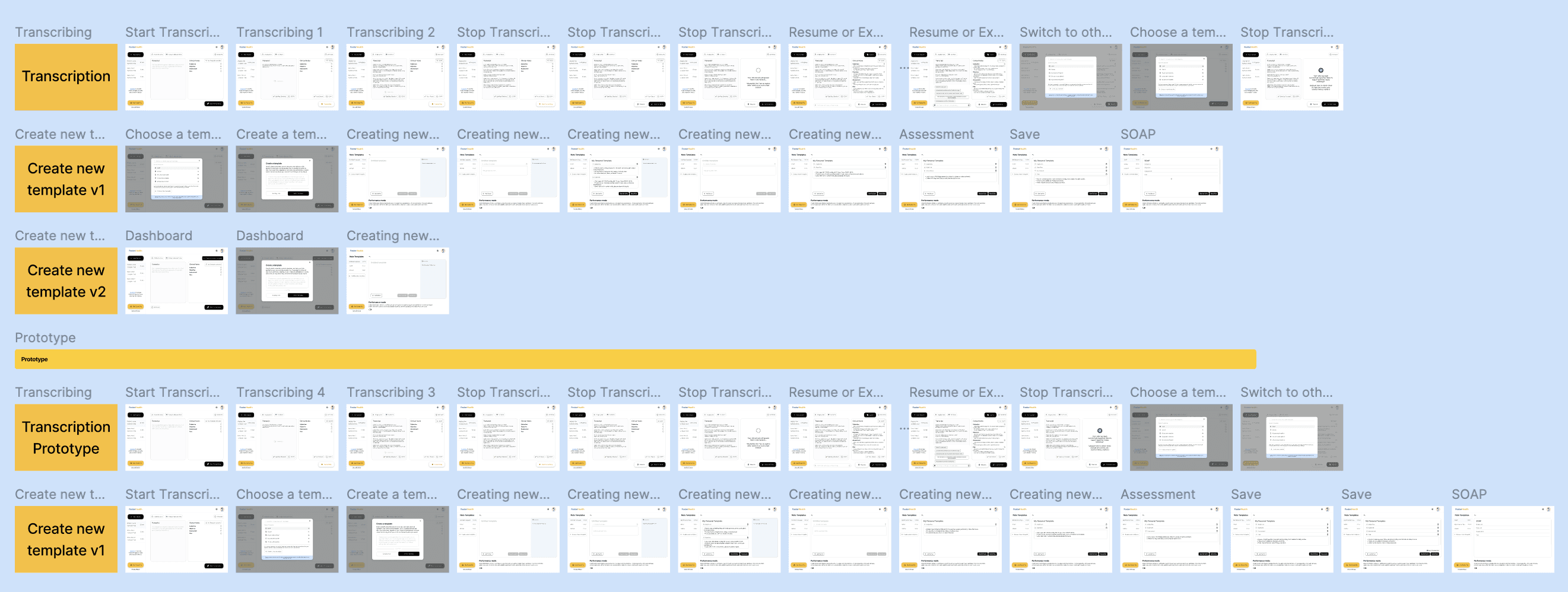
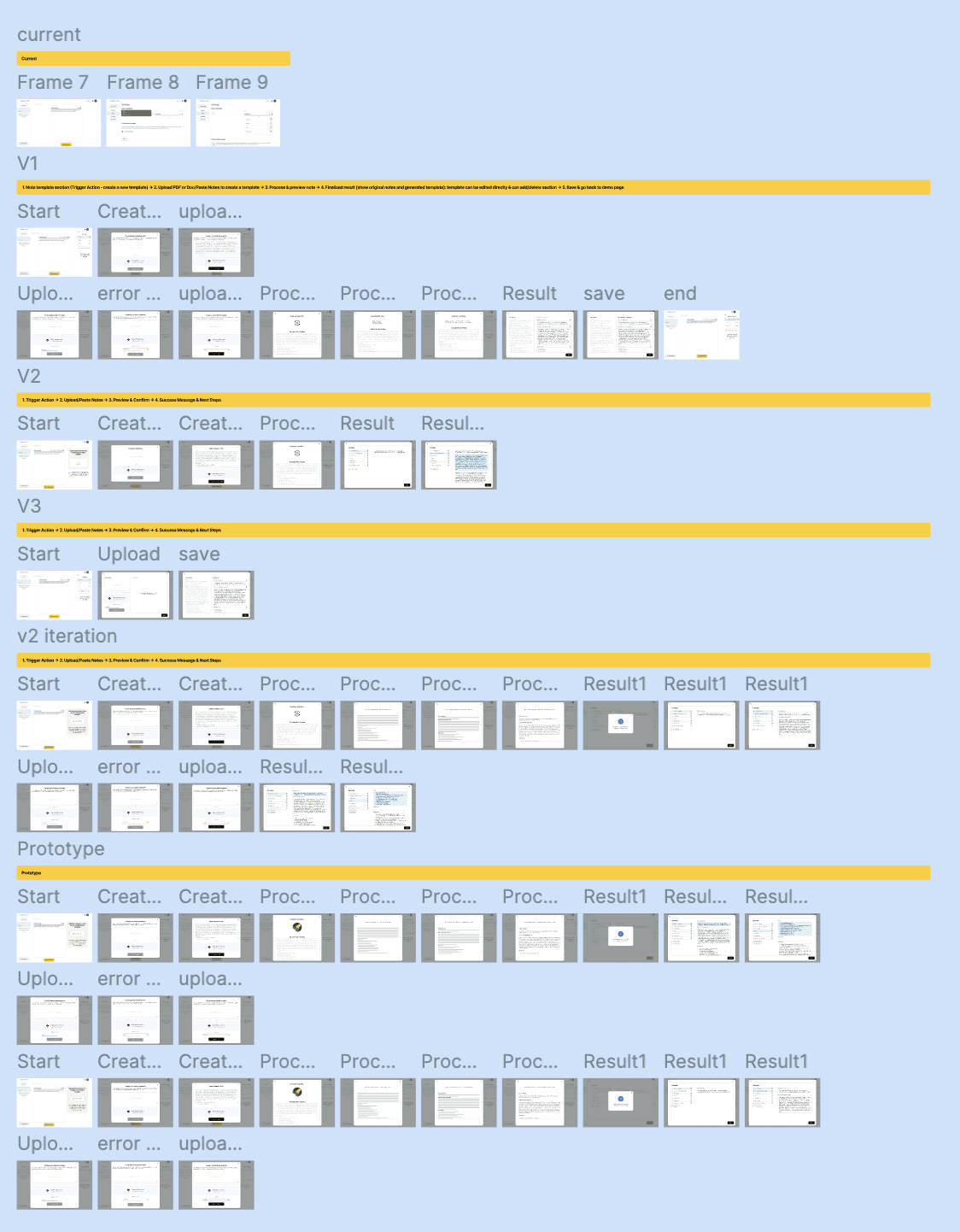
During this exploration, I also conducted meetings with engineers to better understand technical constraints and possibilities. These cross-functional discussions helped ensure our solutions were not only user-centered but also technically feasible.
Two flows that fit into doctors' existing workflow
After internal testing and gathering feedback, I went through several rounds of iteration and eventually completed two key flows:
- Creating a template in Settings — integrated where the current default template lives, to align with the existing structure.
- A dropdown menu on the Transcribing page — lets users select a template before or after transcribing, and add a personalized template directly from there.
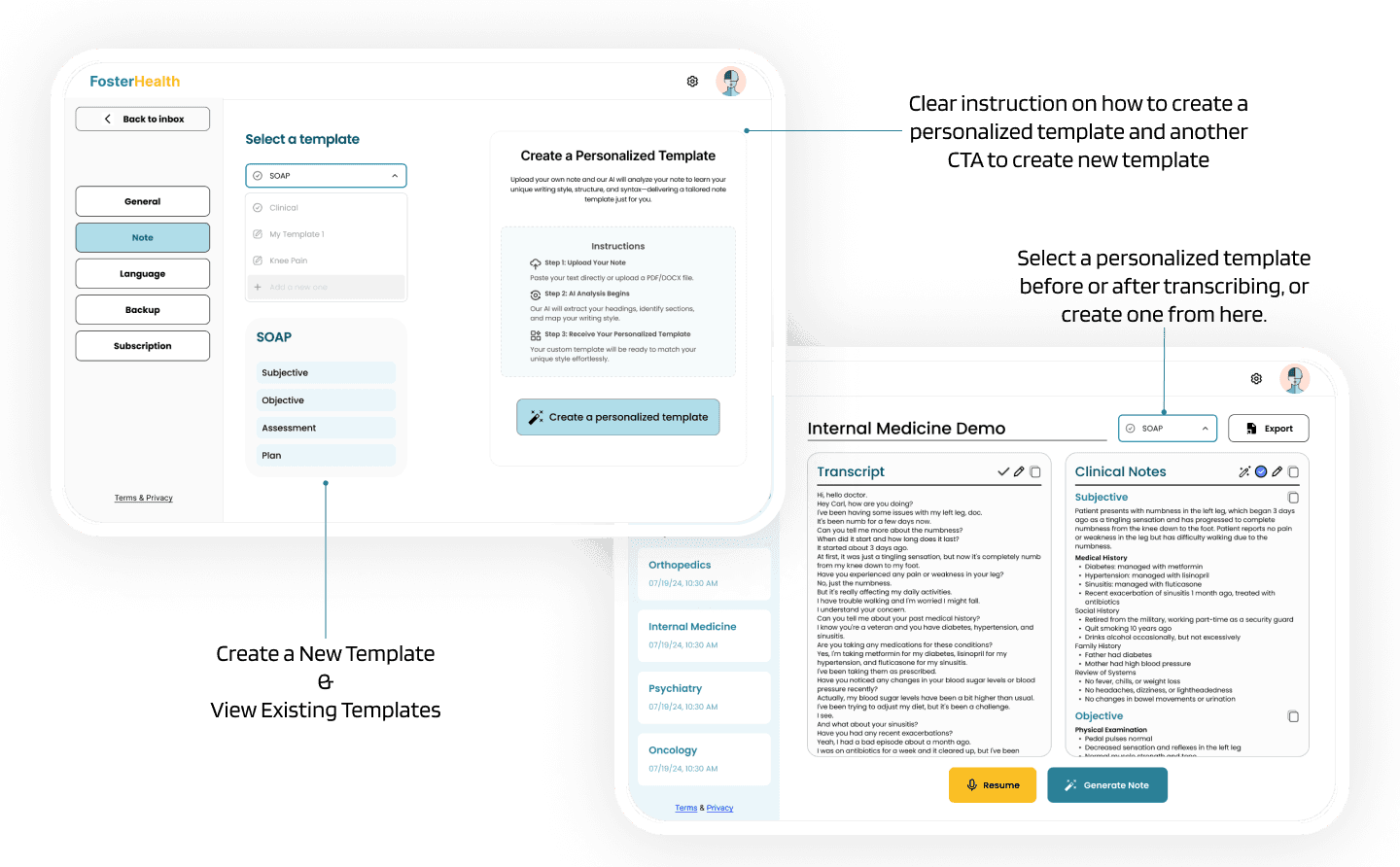
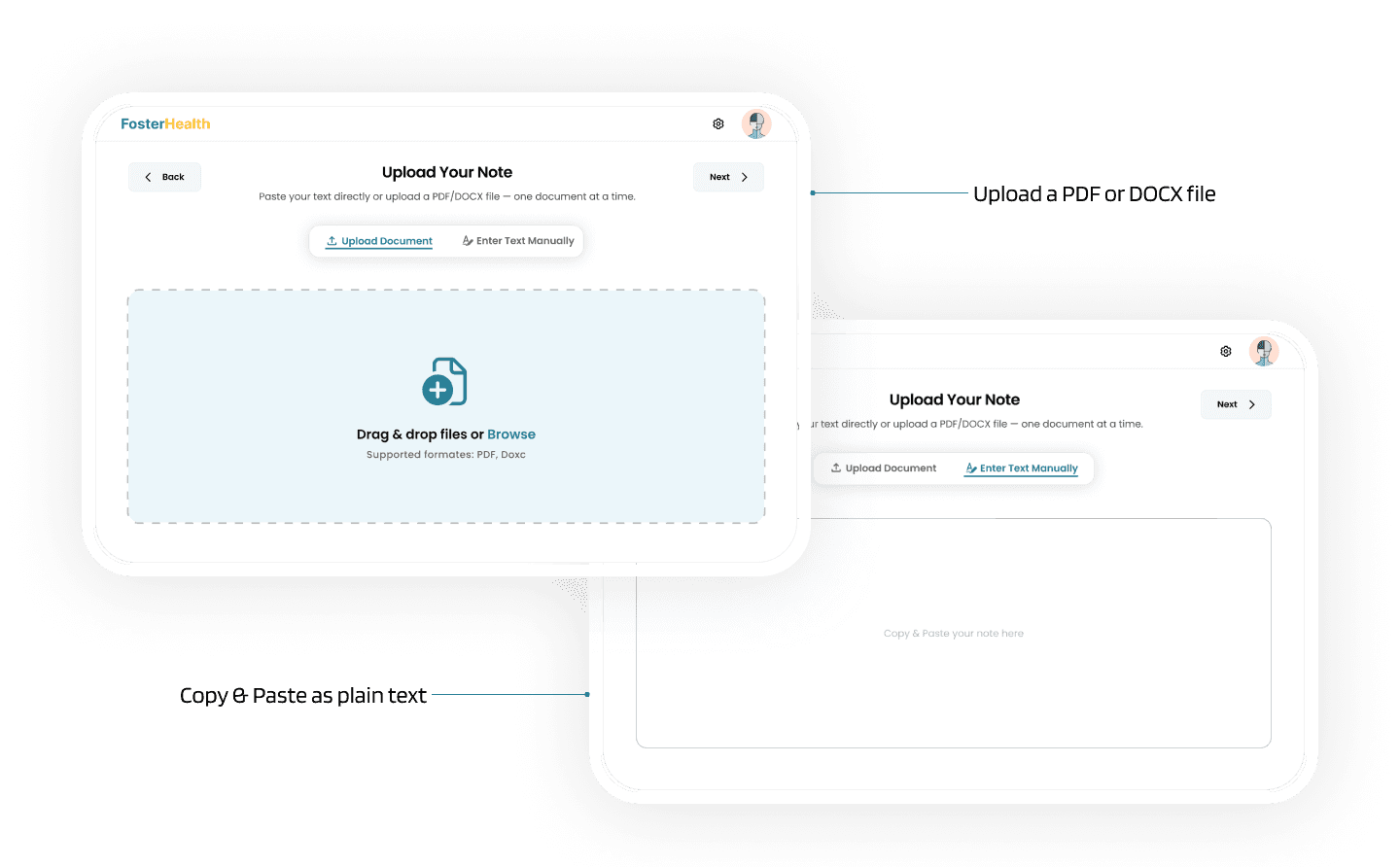
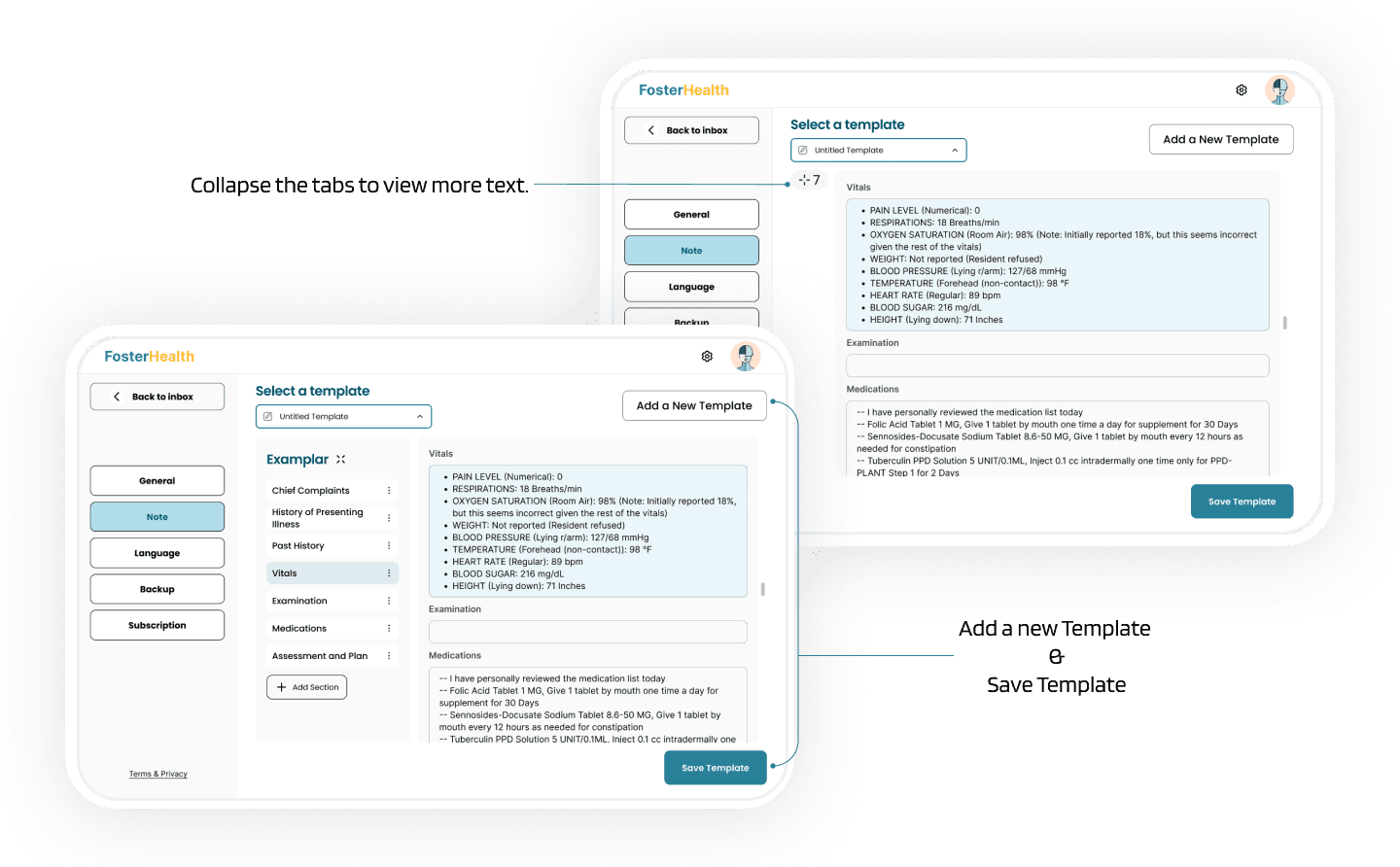
Distinct flows for first-time and returning users, with popup instructions guiding new users to the key modules.
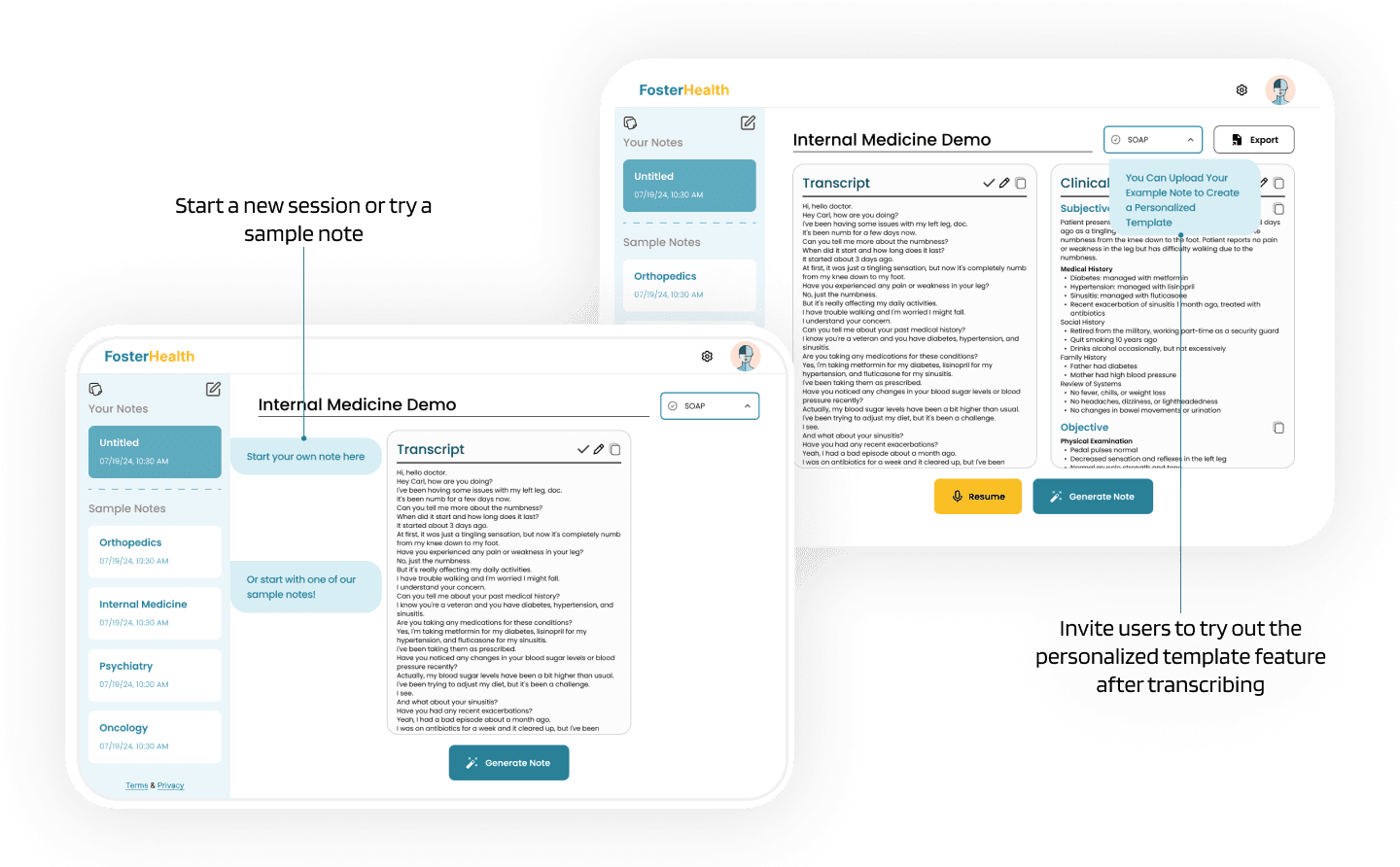
The product was launched in May 2025
Reduced Repetitive Editing for Doctors
Inline editing and customizable templates cut repetitive tasks, reducing average editing time by 30%.
Accelerated template creation
Reduced setup time and simplified customization by optimizing the note upload process.
Guided First-Time Experience
Guided pop-ups and a clearer UI helped first-time users navigate key modules, reducing training time.