First Movers
Designing an AI-Powered Learning Experience
Evolving a course platform into an adaptive, AI-driven system
First Movers is an AI-powered learning platform for founders and business owners, offering execution-focused education through courses, membership access, community engagement, and AI-driven learning experiences. The platform is built to help busy operators learn faster, apply insights immediately, and stay consistent over time.
My Role
I joined First Movers as a contract Product & UX Designer to reimagine the end-to-end learning journey, and quickly expanded into optimizing the entire platform experience including membership, purchasing, point systems, community engagement, and AI workflows as the product outgrew its original structure. I also built multi-site web experiences and designed marketing assets and book materials to align brand, conversion, and product strategy.
Key Objectives
- Clarify and redesign fragmented product flows
- Build scalable UI/UX foundations
- Translate business strategy into interfaces
- Integrate AI into the user journey
Users had access to everything, but no clear starting point
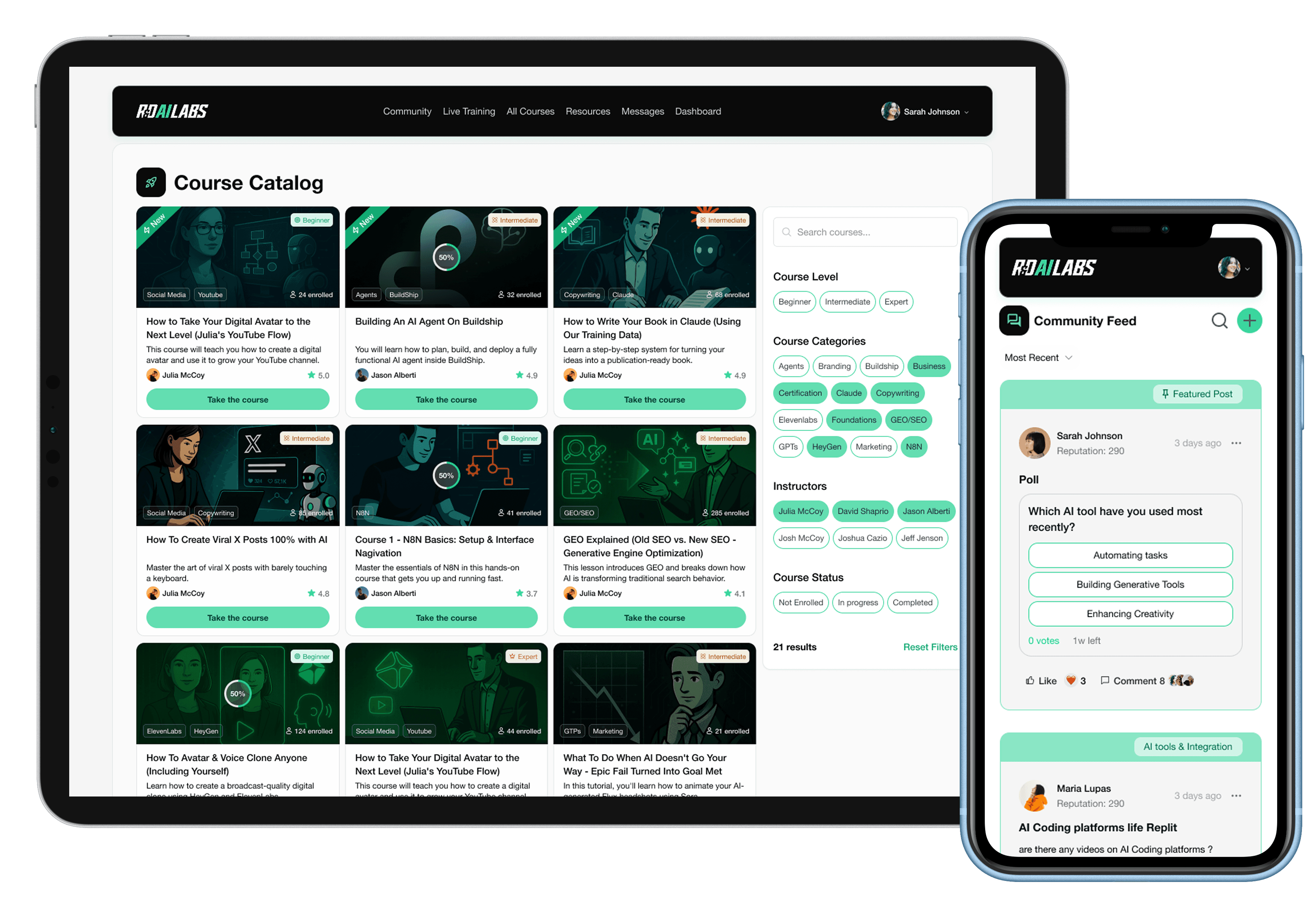
Despite the platform’s capabilities across courses, community, resources, and live training, new users were often unclear about what to do when they first entered the Labs.
The platform had strong content and a trusted founder-led brand, but the learning experience felt fragmented. Users could access many parts of the product, but there was no clear path connecting them.
What we heard from users
Beginners starting point — Help
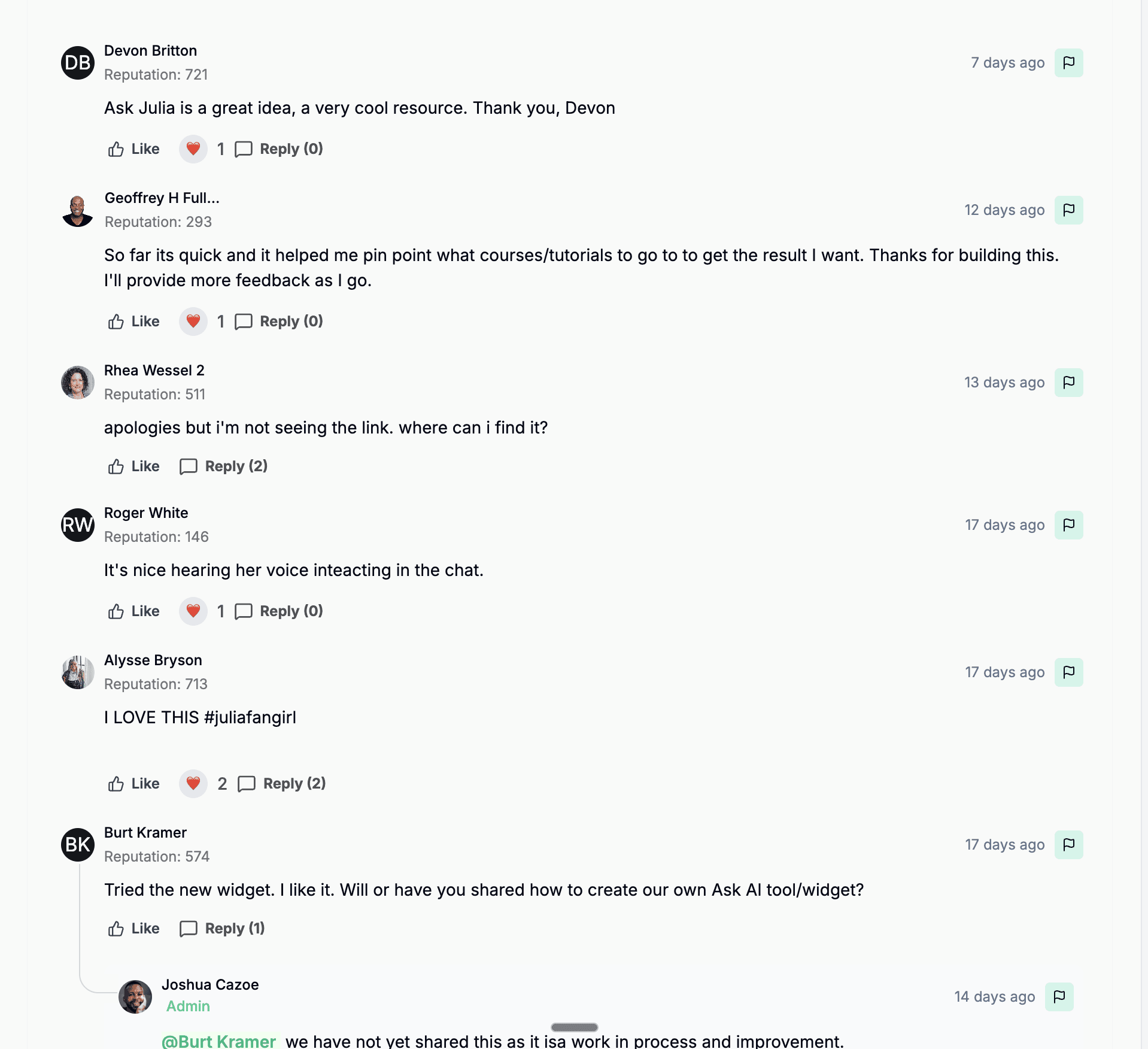
Hi Joshua, I am confused about where to start. Do you have a summary list of each course and the lessons that should be watched in specific order? I need some direction as a newbie. Thank you 😊
Help me pick the right course
I’m trying to reduce the time wasted by my team when uploading content to my client’s website. We are an SEO company and now my team is basically saying they…
The platform was functioning more like a content library than a guided learning experience.
More content wasn’t the solution. Better guidance was.
At first, the work seemed like a UI and feature design challenge. But through product audits, community feedback, and platform analysis, the deeper issue became clear.
The platform did not need to only help users browse more content. It needed to help users understand what to do next.
Users browse courses, resources, community, and trainings separately.
Users receive a clearer path based on their goals, needs, and learning stage.
Connect The Right Learner To The Right Content At The Right Time?
Different learners needed different forms of guidance
Through founder conversations, community feedback, product audits, and platform analysis, I mapped the audience into four learner types.
Four learner types
The Overwhelmed Founder
New to AI, needs results quickly, and does not know where to start.
The Explorer
Curious about AI, but without an immediate business goal.
The Optimizer
Already using AI and looking for efficiency gains.
The Builder
An advanced user building systems, workflows, and internal tools.
This helped me see that the platform could not rely on one generic onboarding path. Users came in with different levels of urgency, confidence, and AI fluency.
Users do not think in categories. They think in outcomes.
The first approach collected more data, but created more friction
The first onboarding concept was designed as a structured assessment. It captured role, goals, AI familiarity, tool interests, learning preferences, and time commitment.
The goal was to build a comprehensive learner profile and use that information to recommend better courses.
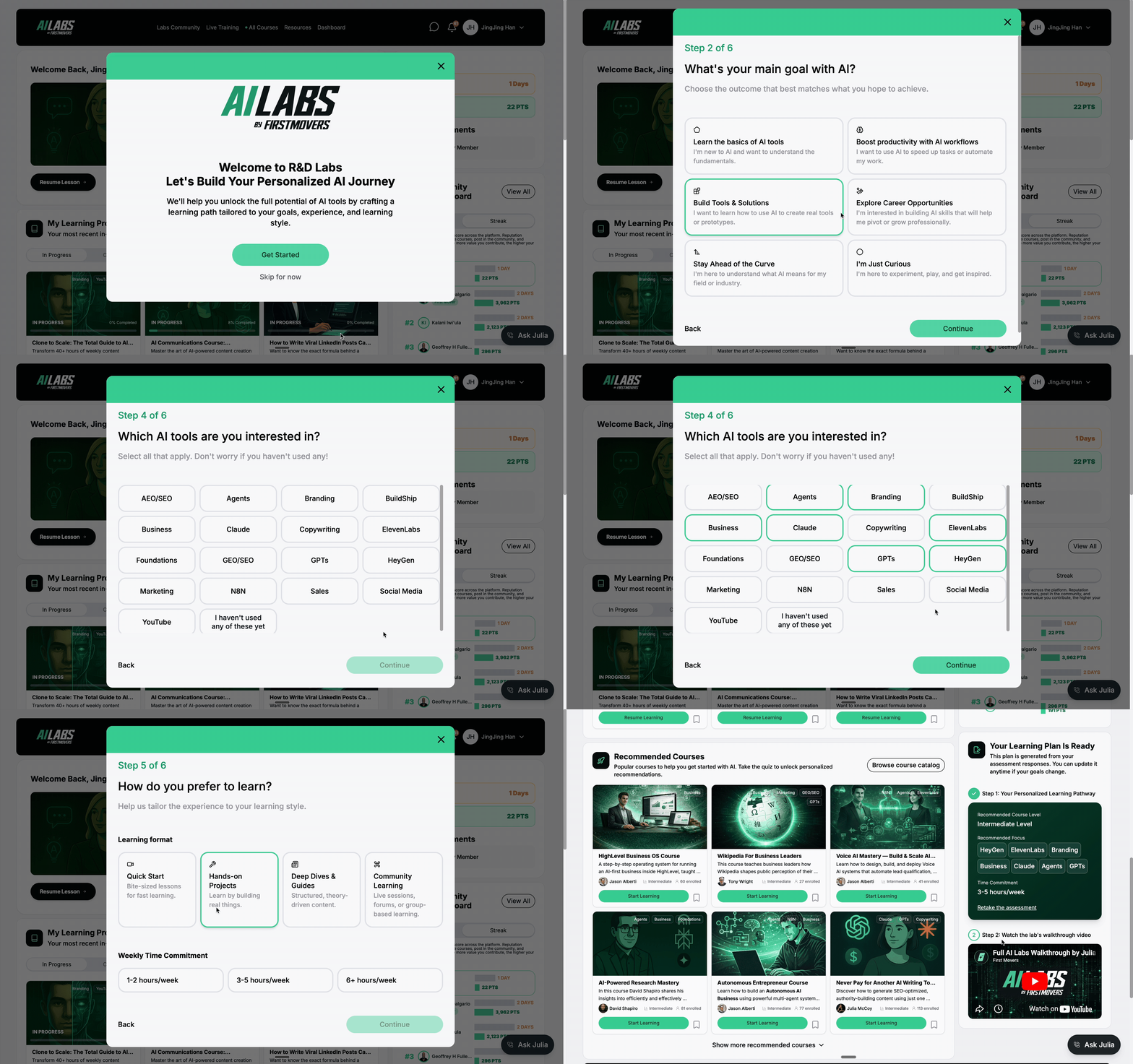
But the experience quickly revealed a weakness: it asked users to define themselves before helping them make progress.
A longer assessment does not automatically create a better experience.
Users did not need to describe every attribute about themselves. They needed faster clarity on what to do next.
We shifted from attributes to intent
I redesigned the onboarding logic around user goals instead of user categories.
Rather than asking users, “What type of learner are you?” the flow began with a more direct question: “What are you trying to achieve with AI?”
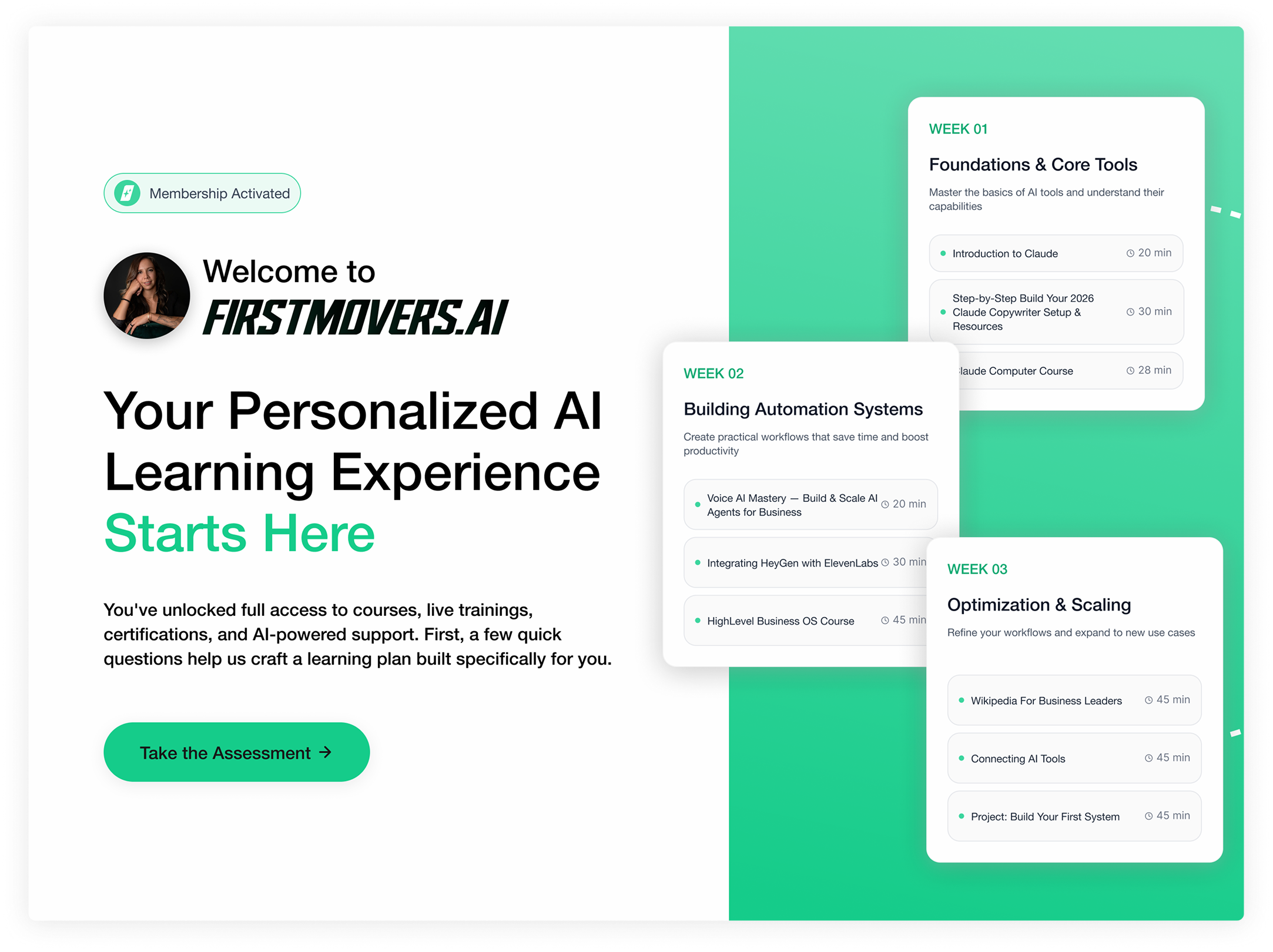
From there, the system could ask smarter follow-up questions and translate the user’s intent into a recommended learning path.
Capture intent before recommending content.
This made onboarding feel more actionable, reduced decision fatigue, and gave users a clearer first step.
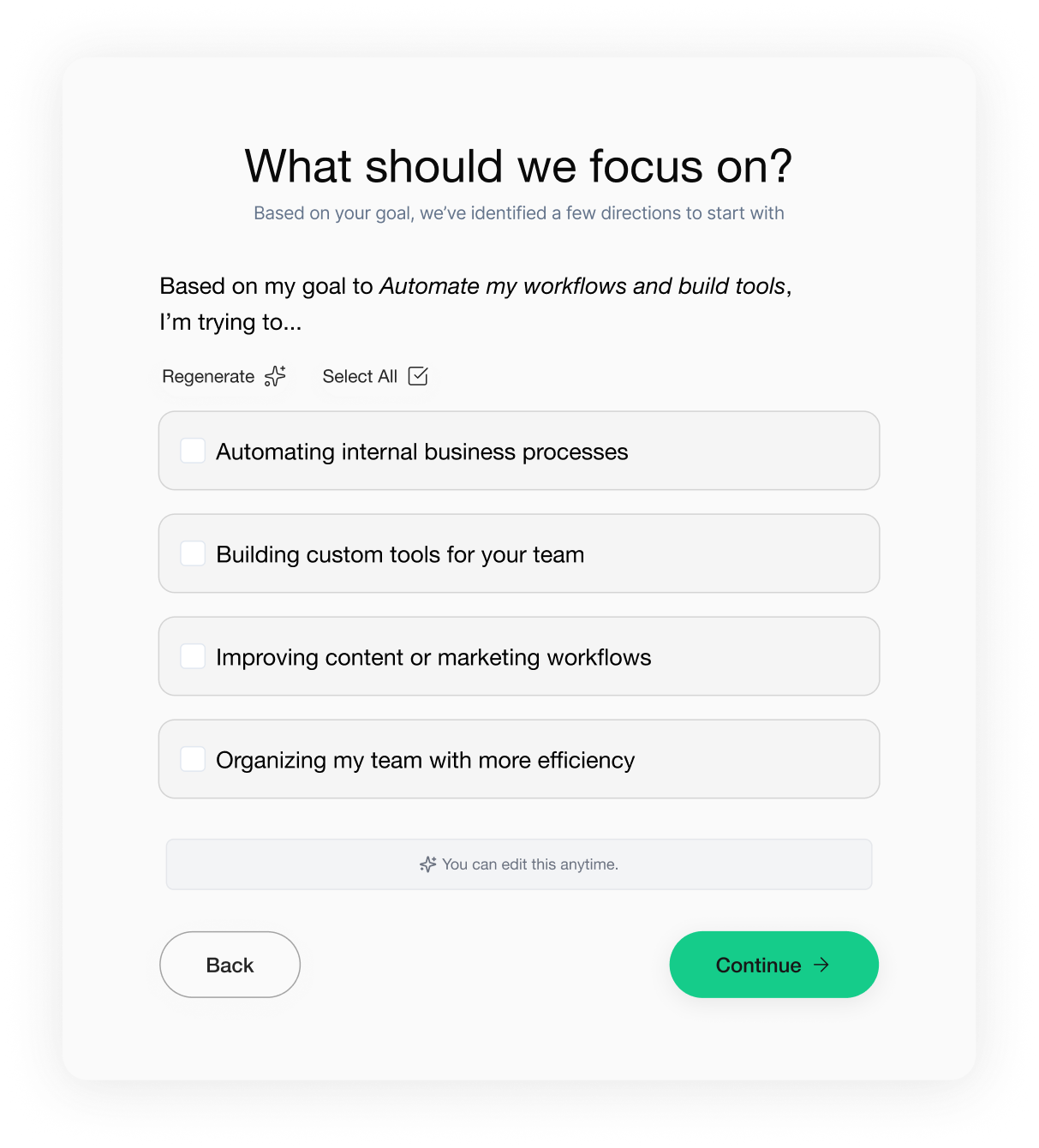
One connected flow, from onboarding to recommendations
New flow
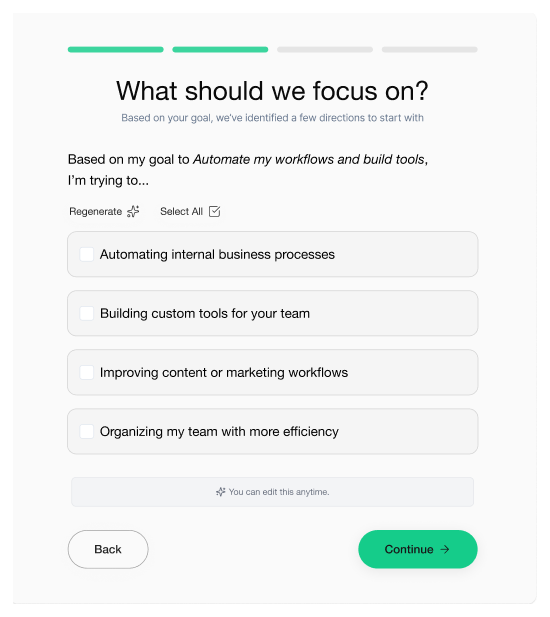
Onboarding
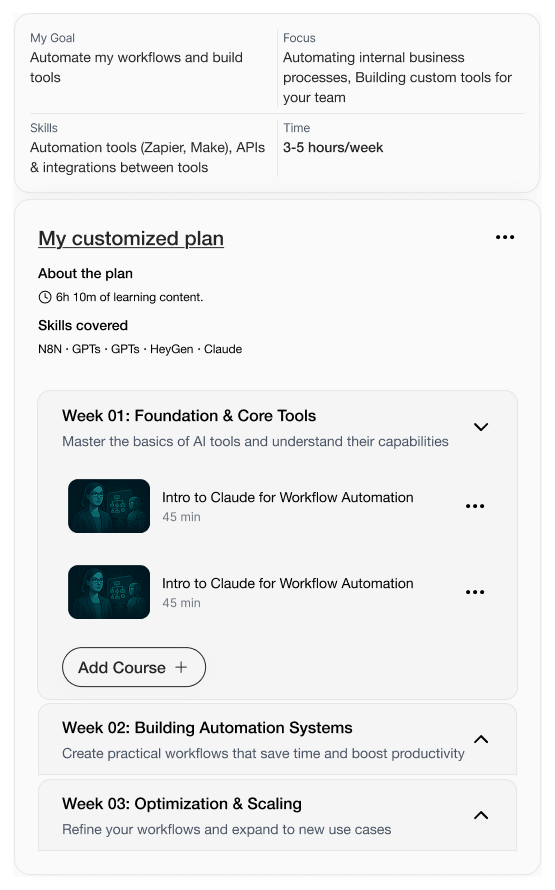
Editable Learner Profile
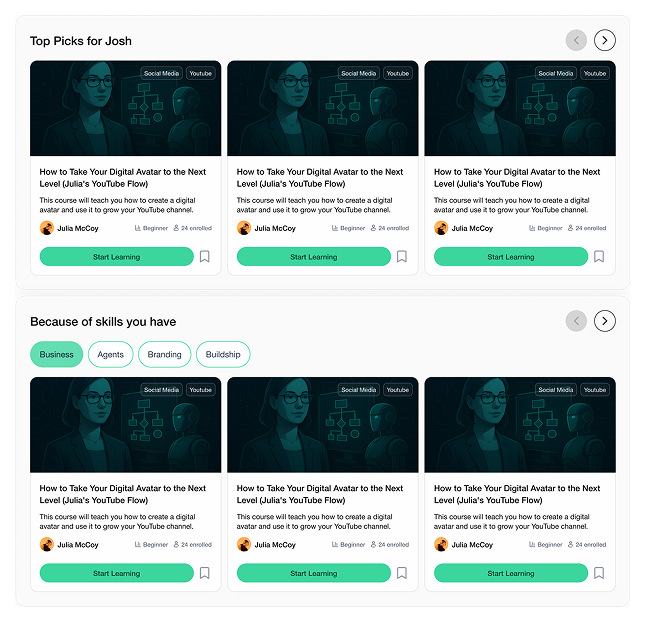
Personalized Recommendations
This ultimately became the foundation of the entire course discovery experience.
Users begin with onboarding, where we learn about their goals and build a learner profile. Based on that profile, the system generates a personalized learning plan — including recommended courses, learning priorities, and a suggested weekly roadmap.
Users can review the plan, add or remove courses, and customize it based on their interests and availability.
From there, the learning profile becomes the starting point for the rest of their journey on the platform. As users continue learning, completing courses, and developing new skills, the system can continuously update its recommendations based on their progress and evolving goals.
Meanwhile, users can also revisit their profile at any time, update their goals, and generate a new learning plan that better reflects where they are in their journey.
Instead of recommending courses once, we were creating a personalized learning system that could evolve alongside the learner.
Users didn’t just want content. They wanted access to Julia.
A major insight from the platform was that users joined because they trusted Julia’s expertise, AI workflows, and teaching style.
They were not only buying access to courses. They wanted guidance on how to apply AI in real business situations.
Julia's Interactive Avatar
Hi, is Julia's interactive avatar only available during live trainings, or it is available in this portal? Thanks
How might we scale Julia’s expertise without scaling Julia’s time?
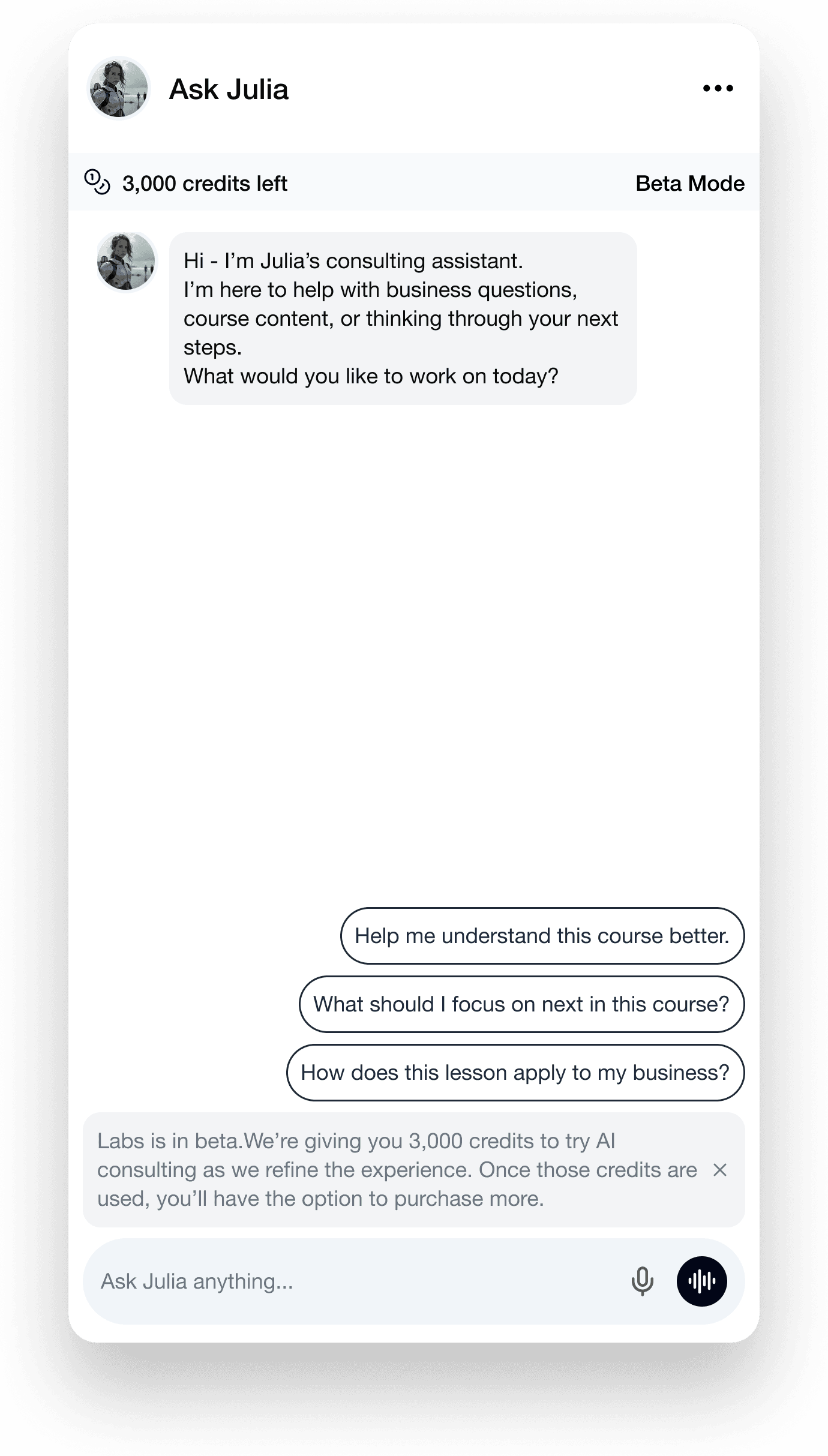
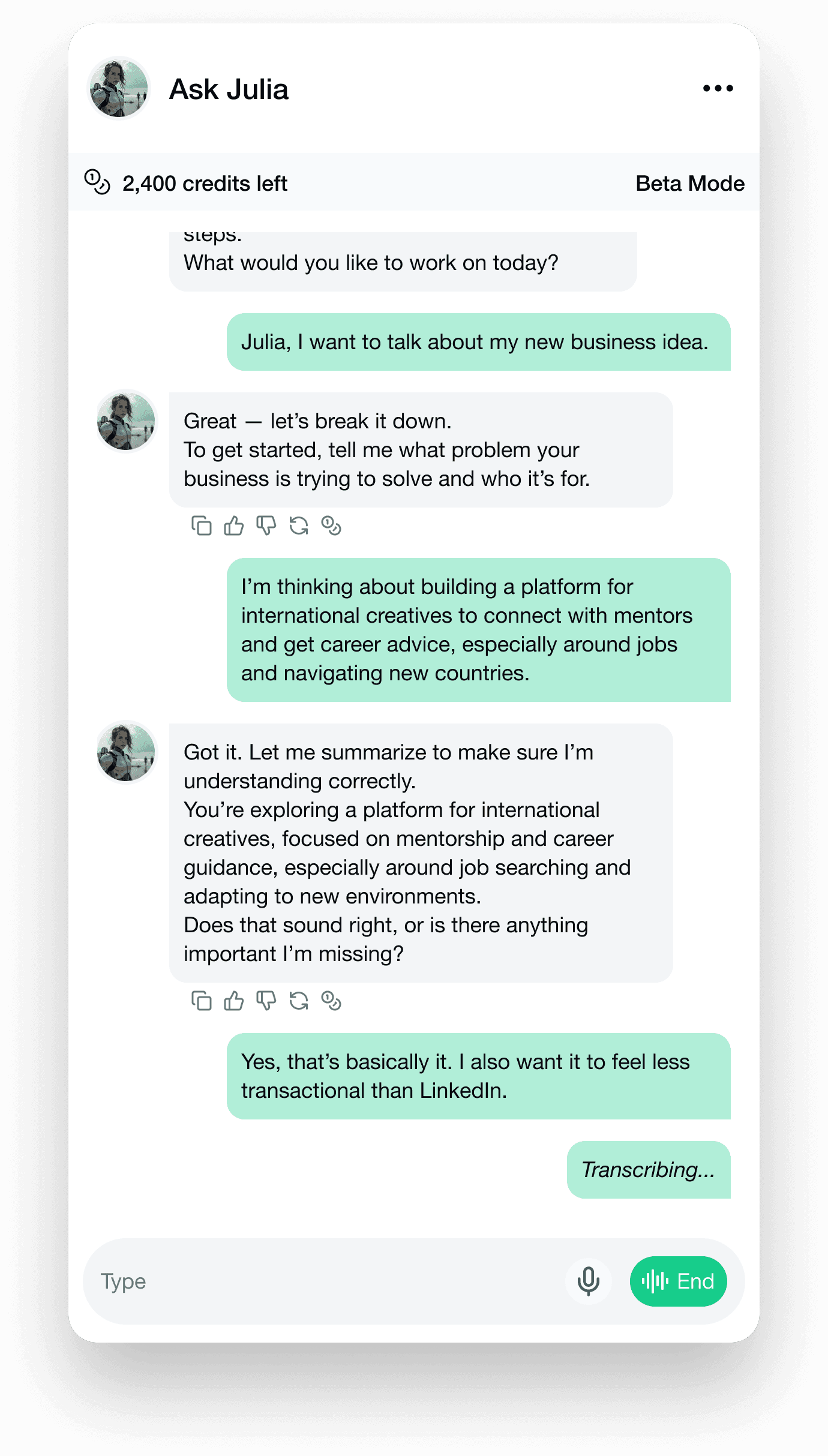
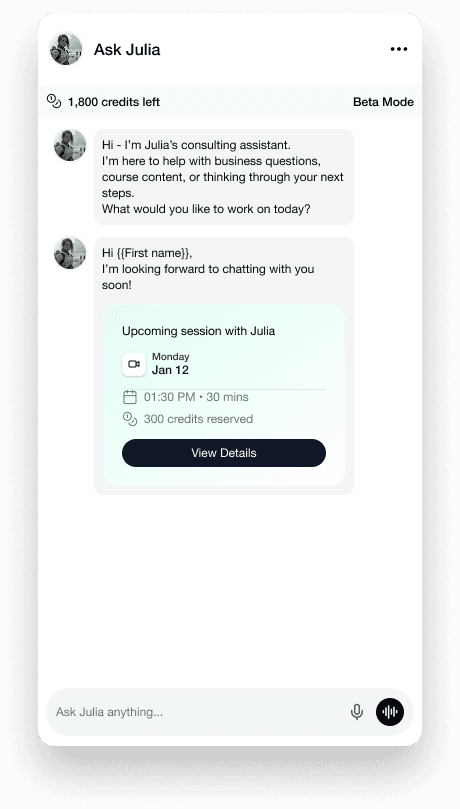
I helped define Ask Julia as a learning companion, not a generic chatbot. The goal was to help users think through course content, business questions, workflow decisions, and next steps.
Ask Julia should help users think, not just search.
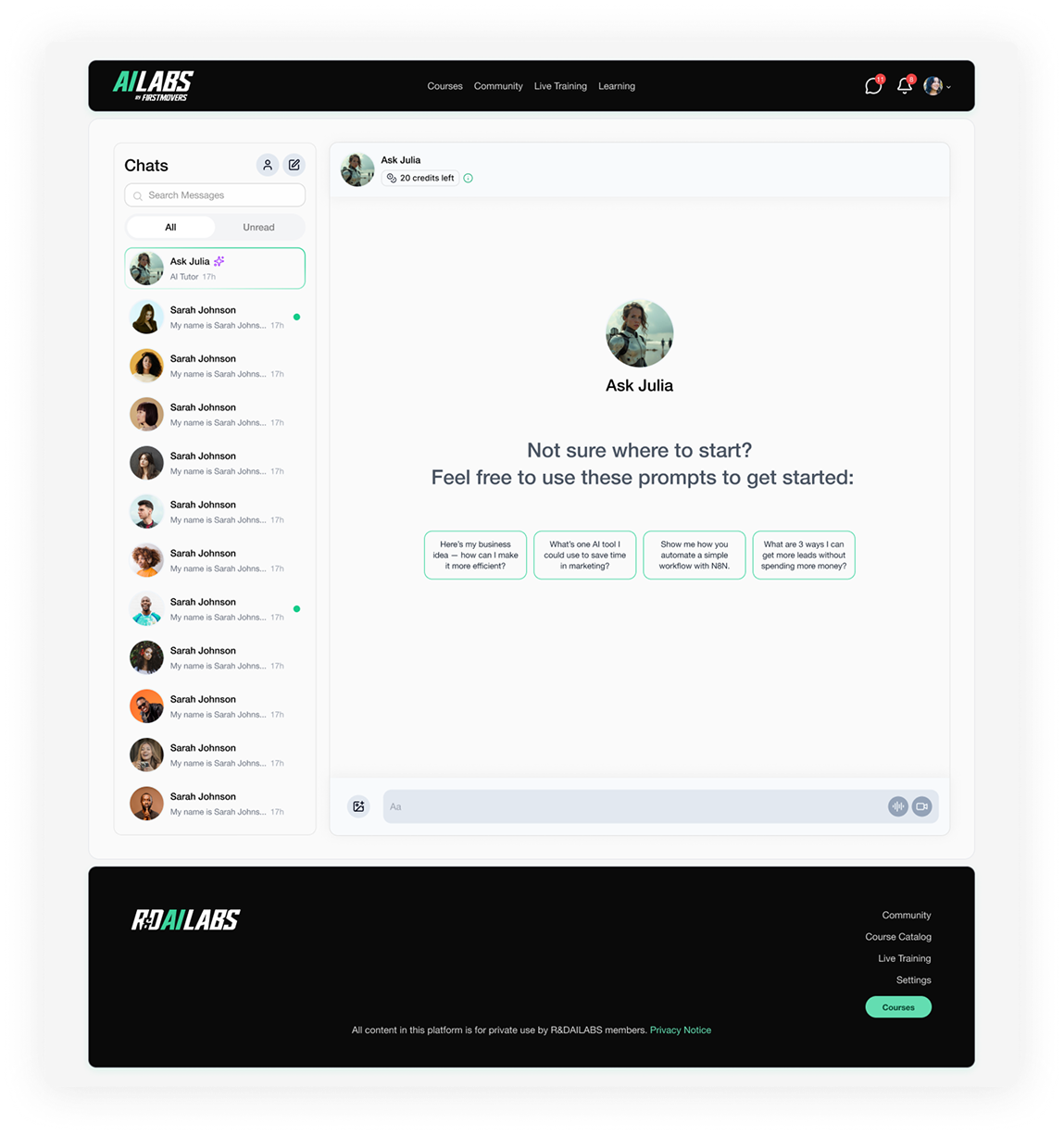
Fewer entry points. Stronger mental model.
Early concepts explored multiple ways to access Ask Julia: a dedicated page, floating assistant, text chat, voice, and video.
But too many entry points risked making the feature feel unclear. Users needed to quickly understand whether Ask Julia was a chatbot, support tool, course search, or separate product.
I simplified the experience around a persistent assistant model.
Ask Julia became a text-first learning companion that could live across the platform and support users in context.
Voice and video were treated as future extensions, not the core mental model.
Start with a simple assistant experience before expanding into richer modalities.
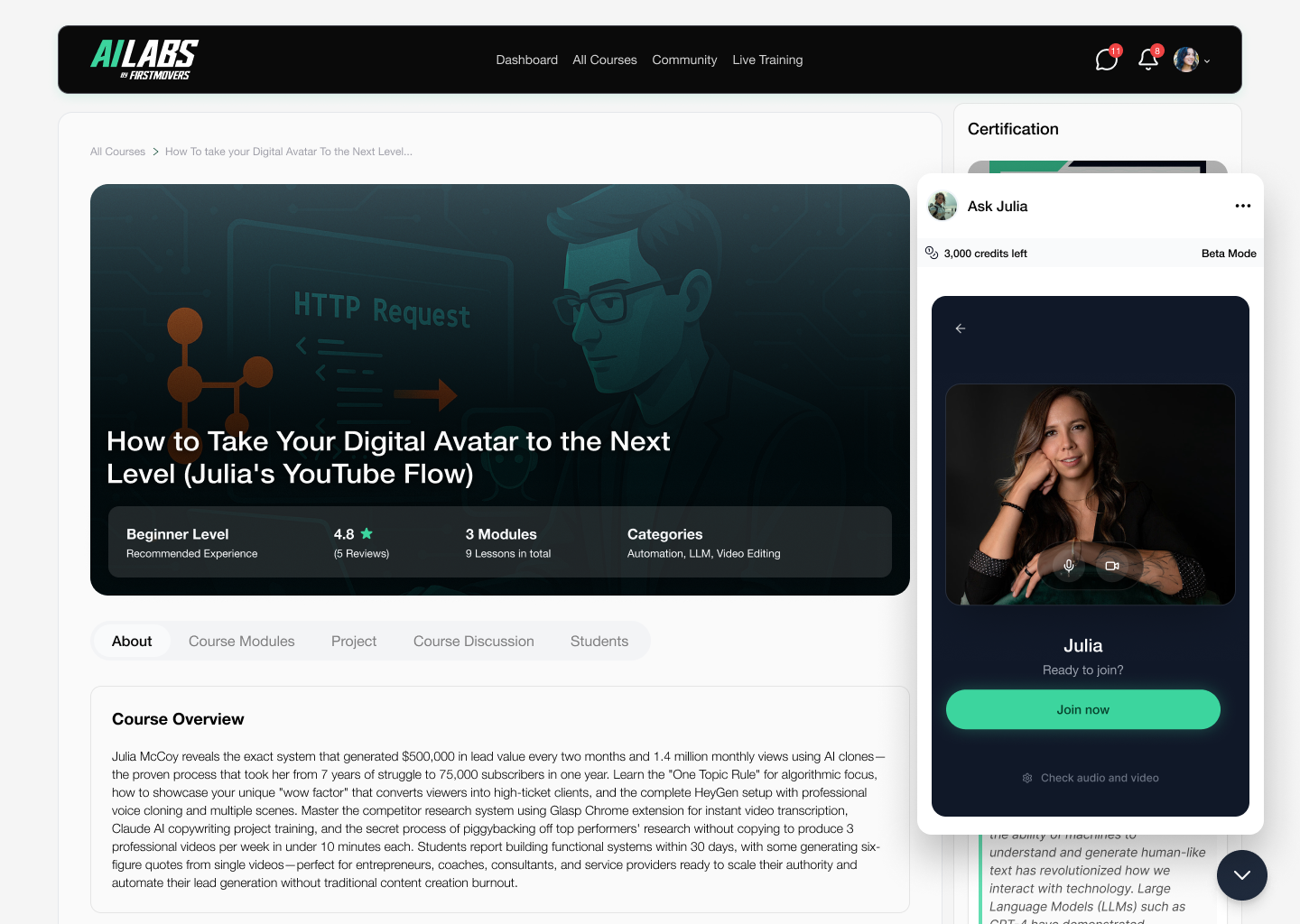
Guidance had to live across the full product
Onboarding and Ask Julia were the two core feature directions, but the broader platform also needed to support a more connected learning journey.
I worked across key product surfaces to improve clarity, hierarchy, and continuity.
Platform areas
Each improvement supported the same product goal: helping users move through the platform with less friction and more direction.
From content access to guided learning
The project helped First Movers shift from a content-heavy platform into a more guided AI learning experience.
Impact of the work
- Clarified the new-user journey
- Reduced decision fatigue
- Connected learner goals to recommended content
- Defined Ask Julia as a scalable expert-guidance layer
- Improved the platform’s information architecture
- Created a stronger foundation for AI-powered personalization
The biggest lesson was that AI only creates value when its role is clearly defined.
Ask Julia became stronger once it was positioned as a learning companion instead of another generic assistant. The onboarding experience also became stronger once it focused on what users wanted to achieve, not just who they were.
Users no longer just access content. They get guided toward what to do next.